Be yourself; Everyone else is already taken.
— Oscar Wilde.
This is the first post on my new blog. I’m just getting this new blog going, so stay tuned for more. Subscribe below to get notified when I post new updates.
Be yourself; Everyone else is already taken.
— Oscar Wilde.
This is the first post on my new blog. I’m just getting this new blog going, so stay tuned for more. Subscribe below to get notified when I post new updates.
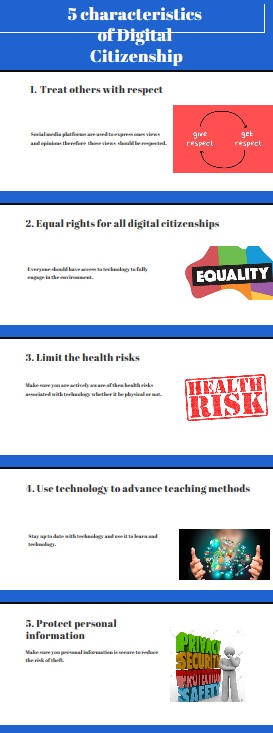
Infographic showing the 5 characteristics of digital citizen
https://infograph.venngage.com/edit/3309b2de-3a4f-4716-b2ba-de57e48cc85c

A digital footprint is known as all that we do and say web based making an impression of sorts. Somebody may have just gotten to, saw or spared something that individuals figure they may have erase from the Internet, web based life locales, or any online instrument, it doesn’t mean it is no more. That implies that since you have erased it, it doesn’t mean it is no more. The individual that got to the data or picture may have spared it and afterward chosen to share it onwards.
Our digital footprint creates the basis of our online reputation, a reputation that others may access to assess whether or not we are trustworthy, reliable, likeable, etc. One needs to be very careful with their online reputation, as it is just as important as their offline one. There are many cons of having a digital footprint here are some examples of harmful digital footprints which may include:
According to IIE (2019) Social capital is “the collective value of all social networks (who people know) and the inclinations that arise from these networks to do things for each other. The central premise of social capital is that social networks have value.
The use of digital technologies to enhance traditional public participation processes and to build a new form of a social capital and digital social capital is being embraced in a range of planning practices. Users who engage and collaborate within social media tools such as Facebook, Twitter and LinkedIn are in fact building social capital as social capital is all about specific benefits that are achieved from the use of social networks, such as trust, reciprocity, co-operation and information.
It importantly creates value for people who are connected to each other. One can increase their social and communication skills. Furthermore, one can grow their general digital literacy, whilst increasing their psychological wellbeing, as they feel connected and respected through engagement with others.
The online collaboration one gains is then obvious that the digital divide would impact people’s ability to leverage their social capital, impending their ability to access information, data and knowledge that may enhance their own feelings of self-worth coupled with their ability to further themselves socially, economically and professionally. There are many ways to enhance and build your social capital such as, join gout and meeting people, the more connections you have the better access to resources you have. You both can evaluate what you need from each other and how you can relate. Simply talking to a person about your life style, work or passions is very effective. Being active on social media plays an important role too. They’re many websites like LinkedIn, where you can connect with people and learn from them or organize to work together. Get involved in social media groups.
Social media groups can give one an access to people who think the similarly to them and is a place where one can share their vision and ideas. It’s essential to display as much information about yourself to other people, so they can really understand who you are and figure out how you could actually build a connection together, because as I said before when I was defining the term itself that social capital is a connection.
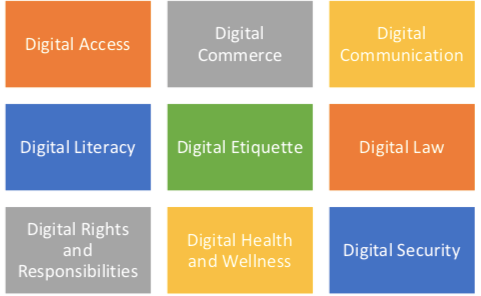
Ribbles nine elements of digital citizenship
19006438 Lindokuhle Nene
This is an example post, originally published as part of Blogging University. Enroll in one of our ten programs, and start your blog right.
You’re going to publish a post today. Don’t worry about how your blog looks. Don’t worry if you haven’t given it a name yet, or you’re feeling overwhelmed. Just click the “New Post” button, and tell us why you’re here.
Why do this?
The post can be short or long, a personal intro to your life or a bloggy mission statement, a manifesto for the future or a simple outline of your the types of things you hope to publish.
To help you get started, here are a few questions:
You’re not locked into any of this; one of the wonderful things about blogs is how they constantly evolve as we learn, grow, and interact with one another — but it’s good to know where and why you started, and articulating your goals may just give you a few other post ideas.
Can’t think how to get started? Just write the first thing that pops into your head. Anne Lamott, author of a book on writing we love, says that you need to give yourself permission to write a “crappy first draft”. Anne makes a great point — just start writing, and worry about editing it later.
When you’re ready to publish, give your post three to five tags that describe your blog’s focus — writing, photography, fiction, parenting, food, cars, movies, sports, whatever. These tags will help others who care about your topics find you in the Reader. Make sure one of the tags is “zerotohero,” so other new bloggers can find you, too.
Have a WordPress.com account? Log in now.


