Ribbles nine elements of digital citizenship
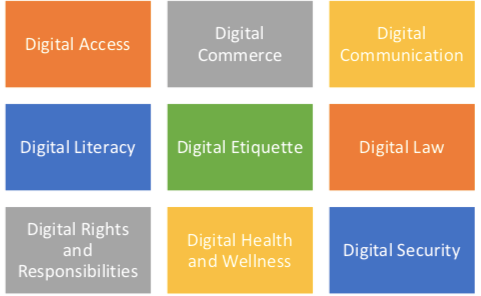
- Digital Access– Full electronic interest in the public eye. Innovation clients should know that not every person has the equivalent mechanical chances are as yet progressing in the direction of equivalent computerized rights and supporting electronic access is the beginning stage of Digital Citizenship. Full electronic cooperation in the public arena, which incorporates ensuring everybody has equivalent access to innovation and comprehends the impediments and downsides when this entrance is retained. Giving and extend access to innovation ought to be an objective of every single computerized resident. Clients need to remember that there are some that may have restricted access so different sources should be given.
- Digital Commerce– Electronic purchasing and selling of merchandise. Innovation clients need to comprehend that a huge portion of the market economy is done electronically. Full electronic investment in the public arena, which incorporates ensuring everybody has equivalent access to innovation and comprehends the constraints and downsides when this entrance is retained. Authentic and legitimate trades happen yet the purchaser and vender should know about the issues related with it. Clients need to find out about how to be powerful purchasers of advanced economy.
- Digital Communication- Electronic exchange of information. One of the significant changes within the digital revolution is a person’s ability to communicate withpeople. How to make appropriate decisions when faced with so many different digital communication options, such as when (and how) to send an email versus a text message or casual social media connection. The expanding digital communication options have changed everything people are to keep in constant communication with anyone else. But unfortunately, many users have not been taught how to make appropriate designs when faced with so many different digital communication options.
- Digital Literacy-The process of teaching and learning about technology and the use of technology. A renewed focus must be made on what technologies must be taught as well as how it should be used. New technologies are finding their way into the work place that are not being used in schools. Learners must be taught how to learn digital society. Digital citizenship involves educating people in a new way, these individuals need a high degree of information literacy skills.
- Digital Etiquette- Electronic principles of lead or systems. Innovation clients frequently consider this to be as one of the most compelling issues when managing computerized citizenship. Something other than having the option to perceive unseemly conduct, great advanced natives should realize the proper behaviour suitably on the web. Improper conduct is perceived yet before individuals use innovation they don’t learn advanced native decorum.
- Digital Law- Electronic responsibility for actions and deeds. Digital law deals with the ethics of technology within a society. There are certain rules of society that users need to be aware in an ethical society. Users need to understand that stealing or causing damage to others work, identity or property online is a crime. Hacking into others information, creating destructive worms, plagiarising, downloading illegal music, viruses or creating Trojan-horses sending spam or stealing anyone’s identity or property is unethical.
- Digital Rights and Responsibilities- Hose opportunities to stretch out to everybody in the computerized world. Computerized residents reserve the privilege to security, free discourse and so on. With these rights comes duty as clients must assistance characterize how innovation is to be utilized in a fitting way. Fundamental computerized rights must be tended to, examined and comprehended in the advanced world. In an advanced society, these 2 zones must cooperate for everybody to be beneficial.
- Digital Health and Wellness- Physical and psychological well-being in a digital technology world. Eye safety, sound ergonomic practices and repetitive stress syndromes are issues that need to be addressed in a new technological world. Users need to be taught that there are inherent dangers to technology. Beyond the physical issues are those of psychological issues that are becoming very prevalent such as internet addiction. Digital citizenship includes a culture where technology users are taught how to protect themselves through education and training.
- Digital Security: (self-protection)- Electronic precautionary measures to ensure wellbeing. In a general public, there are individuals who take, disturb or ruin other individuals, something very similar goes for the computerized network. There should be infection insurance, reinforcements of information and flood control of hardware. As a capable native you should shield your data from outside powers that may cause interruption or damage.

